In February, I was making my way back to Manhattan when I struck up a conversation with my Uber driver. I had requested a very short trip between Essex County Airport and Willowbrook Mall, where I was going to be taking an NJ transit bus into town, and he was understandably annoyed about how short the ride was. I felt guilty, but I knew there was no other way to get to my destination; no bus routes, no trains, and few sidewalks exist between these two places. After I had explained this to him, I wondered why he had accepted the job in the first place. Surely he must have known the length of the trip, right? As it turns out, drivers can only see ride details like distance if they keep their acceptance rate above a certain threshold.
To maintain a favorable acceptance rate, they must avoid declining trips, even if it means driving long distances for short, low-paying rides. If they refuse, the rate goes down, and some details disappear. This allows Uber to meet demand in areas where there aren’t many drivers, such as suburban New Jersey. In this instance, my driver began his day in Newark and then went to Paterson, where he wasn’t offered any trips. Then the routing algorithm, knowing that he couldn’t refuse, sent him all the way to Fairfield. He had no way of knowing that my ride would only last about five minutes. Yes, it’s cruel, but unfortunately it’s not surprising to anyone familiar with Uber’s tactics.
The company has long been criticized for the treatment of its drivers, but it has largely been able to hide from accountability. The business model allows Uber to posture itself as a mere mediator between the worker, who owns the car and maintains it, and the customers. Framed in this way, it says to the worker that they are a capitalist just like everyone else, in charge of their own micro-business. Yes, Uber sets the fares, controls income, and encodes the driver with all sorts of opaque performance ratings, but that power dynamic is unimportant, they say. “Don’t worry! Drivers keep 100% of the tip!”, they assure us, while they quietly pocket their billions.
Clearly a lack of transparency is core to their business, and if a driver knew exactly how much they could expect to earn, they would be foolish to even consider it. One user on r/Uber describes it this way: “misleading drivers and the general public is a favorite pastime at Uber”.1 And this state of affairs seems to be accepted by many as a fact of life. The guy I met in New Jersey had only bad things to say about his employer and seemed fully aware of his exploitation. If I had brought up what his CEO Dara Khosrowshahi says about the future of the business, which is that robotaxis will gradually replace drivers over the next 15-20 years, my guess is he would’ve been fully resigned to this fate.2
So what is he supposed to do? Work himself to death until that day finally comes?
No, he has a right to fight for dignity and respect, just like anyone else. Bargaining for better working conditions should be the aim of any dignified workplace, and rideshare companies make that exceedingly difficult to do. Their ruthless control of information and insistence on defending the gig worker model forces drivers to think of rideshare as a side hustle rather than a job. On the road, drivers are then constantly searching for a competitive edge over their coworkers, which discourages any meaningful workplace solidarity. Moreover, some drivers with the know-how (or sheer luck) to game the algorithm and make some quick money give prospective drivers the impression that “hustling” is the norm. But some of us can see through this veneer of flexibility. There are clearly drivers who do depend on Uber for income, and they are struggling to get by.
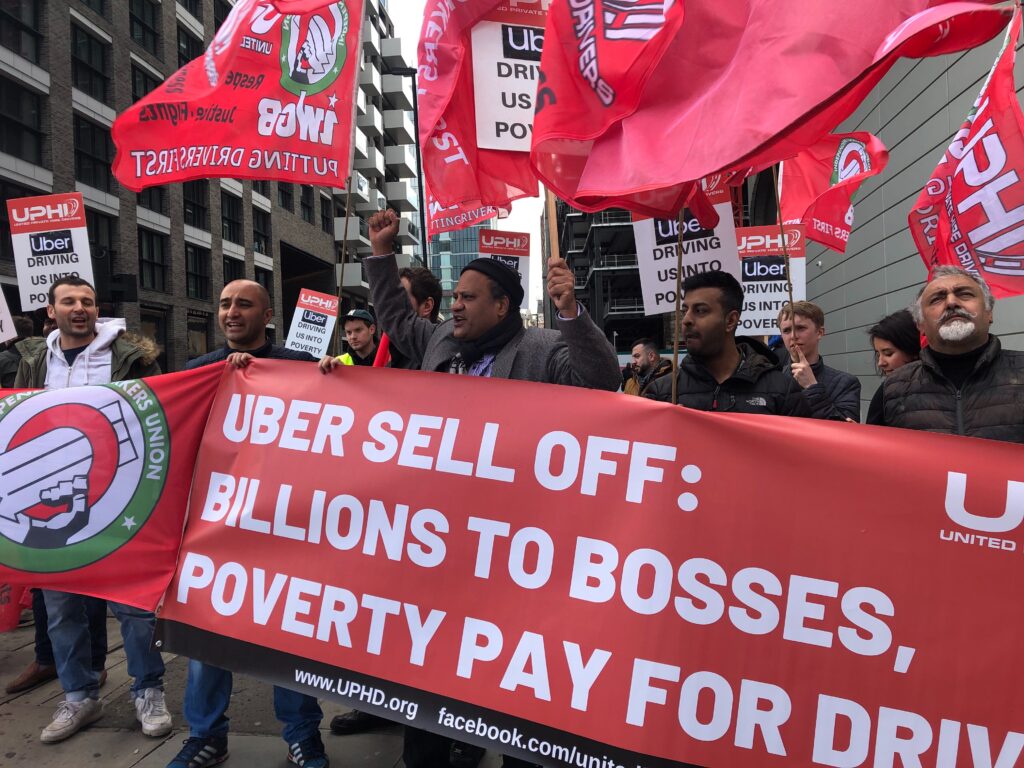
The public isn’t always sympathetic. “Shouldn’t they know what they’re signing up for?” or “Can’t they just get another job?” people will say. And this is exactly what the company wants, because it helps them evade accountability. Instead of thinking in this way, we ought to be asking ourselves if the gig economy has any right to exist in the first place. We should realize that just because a person knowingly goes into precarious work doesn’t mean that the work should be precarious. What the rideshare companies hope for is that the arrival of self-driving cars will wipe the slate clean and make us all forget about these conditions. We cannot let that happen.
For now, the CEO goes on TV and proclaims that drivers are still cost-competitive with self-driving cars, which means they still have some have leverage. But in fifteen years that may be gone, and the company will show no remorse in dispensing with drivers completely. If at that point we cry out in protest, Uber will remind us that they were never an employer in the first place, merely the provider of a platform. They will try to ignore the fact that they only find themselves in a position to procure expensive self-driving cars because of the enormous capital accumulated from human labor over the better part of two decades. If we are indeed approaching a self-driving future, our policies toward the corporations that usher it in have to consider the damage caused right now, not in fifteen years.
Gig workers aren’t the only group we need to stand up for. In many cities Uber’s success in conquering the for-hire vehicle market is permitting it to fight for control of legacy transportation services. For example, in Manhattan you can now take an Uber Shuttle to JFK airport, a service that could’ve easily been operated by a city agency in the past. It’s clear that Uber’s claim to be a simple platform-provider is wearing thin. Its attempts to profit from rideshare have been a consistent failure, and it was only through years of manipulating local governments, cutting labor costs, and intensifying it’s operations that it managed to finally do so. Now even this clearly isn’t enough to ensure the company’s survival.
The situation is this: the company once selling itself as the future of mobility in America is reinventing a technology older than time, the bus. And someday soon, Uber will start to purchase or lease its own cars, at which point it will do something truly revolutionary: operate a cab company. This is the future we are now living, one in which the devastatingly underfunded transportation services that the public depends upon are being handed to yet another government contractor who gets to charge us more for the privilege and who only exists because federal, state, and local authorities have been too weak to prevent it from repeatedly mistreating its workers and skirting local regulations.3
Is this really the best we can do?
- https://www.reddit.com/r/uber/comments/1flbkms/comment/lo1wnbp/?utm_source=share&utm_medium=web3x&utm_name=web3xcss&utm_term=1&utm_content=share_button ↩︎
- https://youtu.be/8k-dtW8gSQg?si=5JT98Re1g1u1asBH ↩︎
- https://www.vice.com/en/article/uber-became-big-by-ignoring-laws-and-it-plans-to-keep-doing-that/ ↩︎